Halsey Hands Precious Trail Story, Union County, Oregon
|
Halsey Hands Precious Trail Story To
Granddaughter |
|
|
|
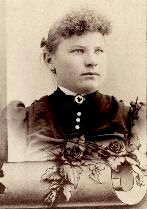
ELGIN - Written in fading pencil by the hand of Ruth Sophia Throe, Frances Halsey's mother, is her precious account of her family's migration from Kansas to Summerville, Oregon. Throe's covered wagon account is written in first-person, making it undoubtedly one of a few, original Oregon Trail manuscripts in existence in this area. Three years ago
Halsey gave the original manuscript to her
granddaughter,
|

|
|
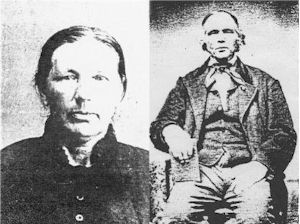
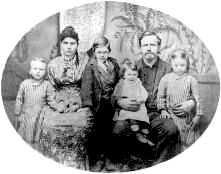
My parents, Hans P. and Clara L. Throe, were married at Hauntown, Clinton, IA 14 Jan 1872. My father came with his parents, Peter and Sophia (Koch) Throe and two other children to America from Germany when my father was nine years old and grew to manhood there. My mother, an only child of Daniel T. and Ruth Fovargue and rich.. He an Englishman raised in London to age 19 years & never knew any hardships. Was pampered and petted, never did any kind of work. |
|
|
|
They raised a
large family. Dan T. Throe, their first child was born 18 Jan
1873 at Hauntown, IA. Then they moved to Maquoketa, Jackson,
IA where my father was a Remington Sewing Machine Agent for
some time, then gunsmith and was in the Brass Band. As my
grandfather was a musician, all of his boys were good in
music. There, I was born 16 Sep 1874, Ruth Sophia Throe.
My father left for the blackhills, with some other men in the spring of 1877. My mother with her 3 children followed late in the fall with an Uncle of hers, Gideon M. Johnson. By railroad, we got off at Wamego, Potowatomie, KS. My father failing to meet us. Mother hired a man with a hack to take us 12 miles over the prairie to where my father was and it rained all the way. How glad I was to see my father again. I remember living there in a dugout and playing over that top. Living there over a year, then we emmigrated to Randolph, Dickeson, KS. My father built a house, mother called it a Jennie-Lind, being built boards stood straight up and down, battered. Our mother was a rich mans only child, knew no hardships before-never touched a baby until her first born. There, 22 Aug 1879, another boy, George F. was born. We
called him Fred. Then the next spring, 10 May 1880, we joined
the "Washington Colony" and started across the
plains. Father
was the only blacksmith on the train of 48 covered wagons.
They begged him to go so we came with only $8 in father's
pocket, he took his family of his wife and 4 children. This
baby was my care, with the other little girl. I looked after
them all the way. I only being between six and seven years
myself. The trip was hard and tedious and for many, many miles
no habitation was seen, just the barren country, plaines,
desert, no water for the horses as well as people. Almost
went mad when water was found. They beat the horses back with
clubs to keep them from foundering themselves. Some of the
people were fought as well. Other places it was alkali, so
bitter you couldn't drink it. Baby Fred would reach toward
the stream and cry, he wanted water. I'd give him some, he
would push it away - kept reaching towards the creek. It was
the same as I got him. So bitter, couldn't kill it in the
strongest coffee. When we came to good water, it took 2 and
3 men to unhitch the teams, crazy for water. One day when we were camped eating our supper, blanket
spread on the ground close to the fire, the manager came and
pointed to a trail - said to father that trail leads back to
our last nights camp, three miles away- we had traveled 20
miles that day. Horses were all gave out. That's roads in
those mountains. In memory I see it yet, my father would
shoulder his gun and walk all day, and sundown we would go
into camp. Father would work until 11 p.m. and many nights
until 1 a.m. Could hear the anvil ring. Our mother would
unhitch the team, put them out to feed, sometimes there was
nothing for them close by. Some men herded them. At night,
mother would rustle wood, sage brush, or buffalo chips. My
brother, Dan, helped her while I took care of the other two
children. When we were in the mountains some days, our team gave out, we were left behind to rest the horses, then followed up, but never caught up until the next morning and as we crossed a little mountain stream, my father walked on ahead, or to see the light of campfires, but none were visable, so he returned saying we will have to stop here for the night as it's an aweful steep road ahead and hard to go down, can't be done tonight, so we camped. He tore up the pole stuck it not far from the campfire, as it began it get began to get aweful dark my mother had the three children go to the stream to wash. The camp was five miles ahead in this canyon back in a cove. My sister, Mary Naoma was 2 years younger than me - when I was nearly 3 years old I do remember a cyclone. I said come see the tree, it laid down. Then the folks took us 3 kiddies back to Clinton, IA. Mother said it was on a visit, all summer while our father went to the blackhills in South Dakota sending for us to come to him at Wamego, Kansas. We camped by a creek - it was raining hard. Everything was wet the next morning. Had breakfast by campfire. A girl named Louise Miller brought a big basket full of fresh baked bread. My mother did not get baked the evening before so they baked it, brought it hot to us. It was a long and a hard trip, many hardships. Father said we'd go back in 3 years to mother's old home in Iowa as we were going back that fall if the colony had not come along. Sun shown hot or else the wind blew hard. Sand and dirt in our eyes, that is the way it was for miles and miles - day after day. Mother drove and father walked away from the train but kept close enough to help when needed. We had 2 doctors, old Dr. Brown and Dr. Graham. We made 20 miles a day, but as the days dragged along, food got scarcer, we got down to 12 to 15 miles a day - then 10 miles. We stopped one day a week to lay over to rest the horses and ourselves and the women washed. Water was scarce at times. Had 20 gallon barrels fastened on outside of each wagon for drinking water. It sure was a grand sight to travel in the mountains and timber, cooler too. Still I seem to hear the wagon wheels bumping over the rocks and the echo in the canyons and see my father rough-lock the wheels with big log chains, going down the aweful mountain roads, so steep and far down, it was scary. The water barrels fastened to wagons would come loose once in awhile, and far down in the canyon it would roll, broken in a thousand pieces. I remember when we ferried across the Green River, we were nearly all day. We camped close by the night before. The ferry was small. We only went 2 or 3 miles after we crossed and camped for the night. When we came through Utah, I see the houses with flowers growing all around them. I cried to stay there, said "why can't we have one of them little houses, I'm tired, let's stay," mother said no it wasn't flowers I saw but gardens, something to eat, and it was the Mormon settlement. We couldn't stay there, but I kept watching through the round hole in the wagon cover at the back of the wagon until it faded from sight. Then I threw myself down and cried so hard because I wanted to stay. That was Salt Lake City. Never will I forget the scene there when we came through Idaho. I seem to see a lake, we camped there, stretched our tents, plenty of grass. Father picked out a tent as it was growing dark and took us one by one wrapped in a blanket and struck us in the tent. Somewhere near Cheyenne, Wyoming we stopped one night. Boys were going back to town. Manager said "no boys, you'll get in trouble," but they insisted. Manager made everyone hitch up and go 10 miles farther on - it was way in the night when we camped - laid over the next day. One night as we had just gone into camp, a cloud of dust ahead of us, came riders with prisoners, it was a vigilantes committee. Two men who had come out from the east somewhere sometime after the days of '49, had no luck in California. Lost all they had - and had worked for others. Could not get enough ahead to get a team and grub to return home so they started on foot with pack on their back. When the load got too heavy, they'd ditch a blanket, then some cooking utensil, then shoes wore off their feet - went barefoot. Finally they had ditched everything, even their coats, got foot sore, so they watched the cowboys horses when they hobbled them for the night. They came along, took one apiece - rode it not fast, but steady 'til somewhere in the mountains a bunch of cattlemen came and asked to have a tent for their prisoners. They told of their stealing their tired saddle horses and would hang them in the morning. Our men begged for these two young men after they got their story as they tried them without a court or a jury. They said they had come west to find riches in the gold fields of California. Had spent their all, and were broke and homesick. Were on their way back home and footsore and couldn't hardly walk, so when they came to saddle horses, they put a rope hackamore stile and rode them bareback until they came to some more horses. There, they would change, turn the others back the way they come and go on. I don't think they changed very many times until they were caught. The prisoners slept in our tent. We took the wagon and my father stood guard with others that night as it was his turn. We fed them the next morning and they turned and went our way west and as we came along, away up on the mountainside, two trees stood out. There hung these young men. They rode away and left them for the birds to eat. It seemed too far up for us to go and we only had grub to carry us to the next station. No one knew what the pioneers went through those days. Our team gave out one afternoon and my father drove on one side - said go on boys, I'll follow when the horses rest, I'll be all right. I seem to see with heart-aching their passing by, getting farther and farther ahead. I asked papa - that is what we called him - to go on what will we do now, no one with us? Father, mother and 4 kiddies in the wild mountains. I was afraid. We drove across a mountain stream at sundown. The others had thrown poles in as a bridge. Father pulled them out - then got busy, carried in such a neat pile, more just before it got so dark. Mother called us children to her and said go wash your hands and faces, then she'd give us something to eat. We washed in that cold mountain stream, got a drink, too. Dan, my oldest brother laid down. I said "dog, I can't drink that way." Then our mother called. Broke two rolls into - gave each 1\2 of one, mother and father took none - it was all we had. Father kept a big bonfire all night. At times I would crawl in the back end of the wagon as they never stretched out the tent that night. I called "papa, come to bed, you can have my place." He said "Lula, go back to sleep." I'd be quiet for a little while, then I would go back and call again or ask why he had that red handky-like flag for. "So as they will know it's us," he said but really it was for wild animals but I never knew that. When the darkness began to break, wild birds began to twitter, just as the sun peeked over the the top of the mountains, father said "Clara, guess we'd better get moving if we ever catch up, don't you think?" "Yes Hans, I do," so they hitched up the team. It was never unharnessed that night so he went to the point where the road started down - so very steep - came back and said "no one in sight, guess we will have to try it alone. It's dangerous, too. You'll have to drive, I'll keep on the upper side of the wagon. The children must keep on the upper side of the wagon. I said "papa, why can't I walk?" "No, your too small. You could now keep up. Get lost." So mother took the lines after father put dead-locks on both hind wheels with log-chains. Then he said "wait Clara, I'll look again" went to point, said "yes Clara, here they come." One man came in sight, then more and more, about 20 men waved to stay put till they got there. Oh, what a wild rid down that mountainside we had - we kiddies rolled around like kindling wood, could not stay any place. They when we reached the bottom - five miles down - women came, one with a frying pan with bacon, another with camp bread, hot, and another with a pot full of coffee. They said go on, take your old place - we were half way in the line. Mosquitos were thicker than flies. We broke camp early the next morning. Horses would rare up like they had never been broke. One would hold them by the head while one would hook up the tugs. When we went over a railroad track looking ahead where the wagon ahead had gone through, it left a path in the mosquitos. I called it a tunnel without a cover over it. We had been told about it before we got there. Then, somewhere in Idaho, as we laid over to wash and rest as we did every week, one day mother went to the tall sage brush, picked leaves and put some in bottles to send back to relatives in the east. Where we should get settled, somewhere in the state of Washington, how she cried as she picked those leaves, so homesick to return to her rich father, and other rich relatives. But she soon took heart and kept steadly on. We came through Boise City, but nothing to man us there. When we got to Eagle Rock, one of our horses got poisoned on some weed. When you patted him on the side, sounded like a tin pan. My father got some horse from one in the crowd, tied our horse behind the wagon, he wouldn't lead, broke the rope so they tied him with a log chain. He would lay down and be dragged, so then they left him at or near Eagle Rock, also our heavy wagon. One evening we were getting supper. Sometimes we had wood, sometimes it was buffalo chips. This evening, a woman came to our campfire crying, "Oh, Mrs. Throe, we all are going to be murdered tonight. Indian on warpath, aren't you afraid?" I gazed at her, then mother. She said "no time to cry now, we are here. The only thing I'll pray for is if they do come, I pray they kill us all - leave no cripples to die alone without water in this hot sun, take no prisoners." "Oh, how mean you are, Mrs. Throe." I'll never forget that, but no Indians came, they killed ahead of us - also behind - never bothered our colony. Whenever my parents were lonely and sad, father would climb up on the wagon and start a song, mother would join in - sometimes it would echo back across the canyon. All would join along the crowd. They had music camplight and dancing, church too, every night the first 2 weeks, but after that all violins were put away - so was the Bible as no church work. All too tired - glad to laydown - those that were not there at night to stand guard had several men taking 2 hour stands, some out among the horses feeding, bring them in the corral. At midnight, my father took out his anvil as we stopped about sundown. Our worst enemy were
horse thieves. They'd come ride down on one side of our train,
then back up the other sizing up our teams. Some were worth
$500 a span, others not so much. We had all horses and mules,
no oxen. When we came through Baker City, Oregon they sold
our last horse for $15. How we kiddies cried for Nelly, that
was her name. As we came over the hills to Union, Oregon,
seems to me the town was built on top of a rolling hill. Then
down on through the Grand Ronde Valley, how pretty it was, so
many lakes and so green. The sand ridge wasn't settled up
then. The colony went on, stopped where they said they would. General Manager, with his bride of a few weeks when he left the East, died that winter and Dr. Brown also died. Their widows went East the next year. Back to relatives that were well off to live. The other Dr. stayed in Walla Walla. The colony broke up there. [End of Journal] The Throe family settled in the paradise of Summerville until 1888, when they took their belongings in a wagon and herded their livestock to Joseph. There they filed on land that was originally a tree farm. Clara and Hans lived the remainder of their lives on their claim in Wallowa County. Hans' mother, Sophia Throe, came to Summerville after her husband, Peter, died in a diphtheria epidemic back East. She died on May 20, 1890 and was buried in the Summerville cemetery. |